

Somewhere right now, an employee is hitting ten years with a company, and nobody has said a word. No award, no handshake, not even a mention in the Monday meeting. That silence says more than any mission statement ever will. Years of service awards exist so that moment never slips by. In this guide, we cover which milestones to recognize, what to give at each one, and how to run a program that repeats itself year after year without anyone chasing a spreadsheet.
Why years of service awards still matter
Years of service awards are structured recognition given at employment milestones, most commonly 1, 5, 10, 15, 20, and 25 years. They matter because tenure is earned in years but noticed in moments: an anniversary that passes unmarked tells an employee their time went uncounted, and an anniversary honored well tells them their time built something.
Recognition is not a soft perk. It is one of the clearest signals a company sends about what it values, and employees read that signal accurately. People rarely leave a job the week their anniversary gets skipped. They just quietly update what they believe about the company, and that belief shows up months later in an exit interview.
We have spent 27 years helping Dallas-Fort Worth companies get this right, and the pattern holds across every industry we serve: the companies that treat service anniversaries as real events keep people longer than the ones that treat them as calendar entries.
Which milestones should you recognize?
Recognize years 1, 5, 10, 15, 20, and 25 and beyond. The first anniversary is the most commonly skipped milestone and the most predictive one: an employee who feels seen at year one is an employee deciding to stay, and an employee who feels invisible at year one is already listening to recruiters.
Here is what each moment actually means to the person living it:
Year 1 is the decision point. The employee has learned the job, met the culture, and is quietly asking whether this place is worth a career.
Year 5 is commitment. Five years is long enough to have survived a reorg, a hard season, or a leadership change. This person chose to stay when leaving was easy.
Year 10 is identity. A decade in, the company is part of how this person describes themselves. Milestone awards for employees at this level need to carry real weight.
Year 15 and Year 20 are legacy in progress. These employees trained the people who now train other people. They are the institutional memory that never shows up on an org chart.
Year 25 and beyond is a career. A quarter century deserves a moment the whole company sees, with an award built for that one person, not pulled from a catalog.
What to give at each milestone
The rule that makes every service award program work: significance scales with tenure. A year-one gift and a year-25 award should not look like siblings. Here is how we structure it for our clients.
Year 1: quality branded gear and a ritual they will remember
Skip the certificate. Give something well-made that carries the brand into daily life: a premium jacket, a drinkware and backpack pairing, or quality tech accessories. It is the same thinking behind onboarding welcome kits: a physical object that says “you belong here” outlasts any email from HR.
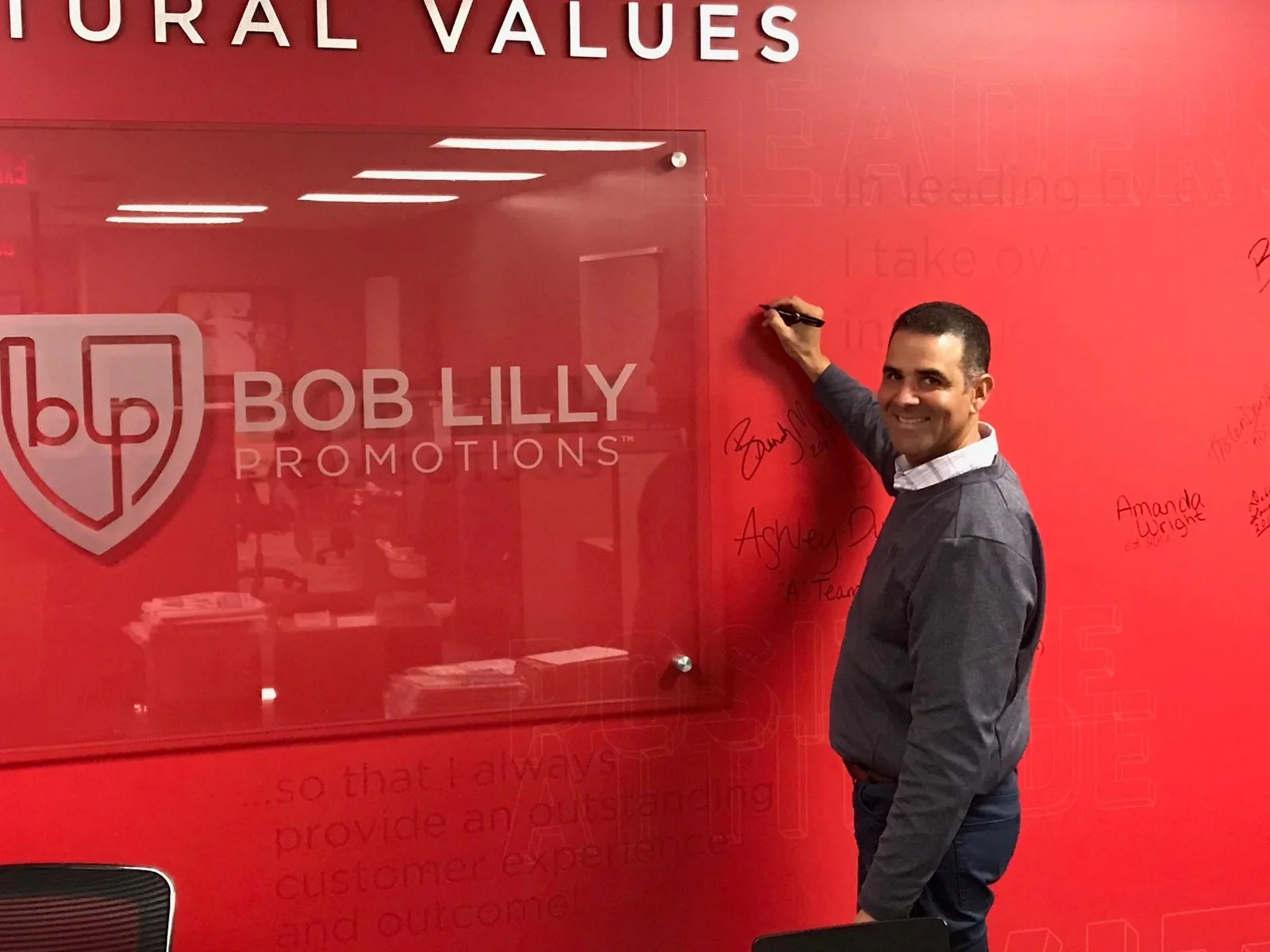
Even better, attach the gift to a moment. At BLP, every employee who reaches one year signs our Red Wall, the wall in our Garland office painted with the company’s core values. We take pictures, we post them, and there is cake. It costs almost nothing, and it turns a calendar date into a company memory.
Year 5: curated choice
At five years, one-size-fits-all stops working. Let the employee choose from a curated tier of employee recognition gifts: a premium bag, a name-brand cooler, high-end drinkware, or a home-office upgrade. Choice signals respect. The employee picks something they want, and the company still controls quality and budget.
Year 10: presentation-grade awards
A decade calls for something with the person’s name on it, presented in front of people who matter to them. This is where custom corporate awards and recognition programs earn their keep: crystal or hardwood pieces designed for your brand, paired with a meaningful gift or experience. The presentation is half the award. Put it in an all-hands, not an envelope.
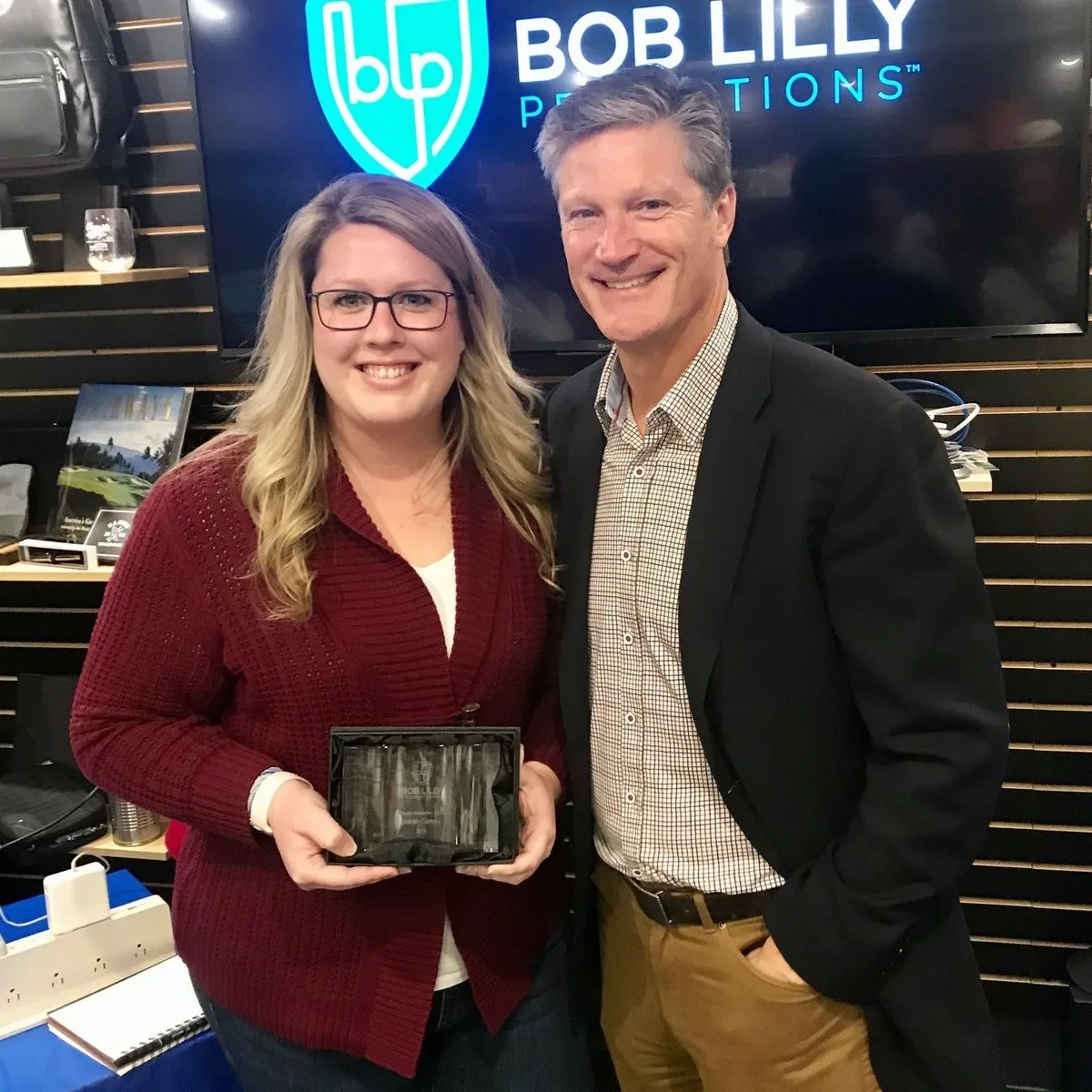
Here is how we handle ten years at BLP: the company funds a purchase the employee chooses. For most of our people that has meant a trip or a cruise. For others it has been in-home workout equipment or something else that lives on in daily life. The point is permanence: years later, that trip photo or that treadmill still says the decade counted.
Year 20: experiences plus a signature piece
Twenty years deserves more than an object. Pair a significant custom award with an experience: a weekend getaway, event tickets to something the employee genuinely loves, or an extra week of time off if your policy allows it. The award marks the milestone; the experience makes the memory.
Year 25 and beyond: one of one
At this level, nothing off the shelf will do. Commission a custom trophy or perpetual award built for that person and that story. When the Dallas Open needed a centerpiece worthy of tennis history, our team built the Lamar Hunt Family Trophy, a one-of-one piece designed from scratch. That is the standard a 25-year employee has earned: an award that could not belong to anyone else.
Years of service award ideas people actually keep
The fastest way to waste a recognition budget is to give something that ends up in a drawer. Whatever the milestone, the awards and gifts that survive share three traits: they are useful or displayable, they are quality the employee would have bought for themselves, and they are personal, with a name, a date, or a story attached.
That is why we steer clients toward curated choice at the middle milestones and true custom work at the top. Generic plaques get stored. A well-chosen gift gets used, and a custom award gets displayed. If it helps to pressure-test your list, ask one question about every item: would anyone keep this if the logo were removed? If the answer is no, upgrade the item, not the logo size.
Tenure is one category in a full recognition program. If you are building the rest of the lineup, our roundup of employee award ideas covers performance, values-based, and fun awards, with guidance on the physical award for each.
How to run the program without chasing spreadsheets
The most common reason employee service awards fail has nothing to do with the awards. It is logistics. Someone in HR owns a spreadsheet of anniversary dates, and the program works until that person gets busy, goes on leave, or changes jobs. Then a 10-year anniversary slips through, and the program has done more harm than never existing at all.
The fix is recognition through a company store: a branded online storefront where milestone awards live in tiers, budgets and approvals are built in, and fulfillment happens automatically. When an employee hits year five, they get a link to their gift tier. No spreadsheet, no chasing, no missed dates. We run these programs on the SellersCommerce platform, and our team handles the rest from our Garland fulfillment center, where we ship 100,000+ packages a year at 99.8% pick accuracy.
For HR teams, this is the difference between running a program and administering one. The recognition still feels personal because the tiers are curated and the presentation still happens in person. The logistics just stop being your job.
What does a years of service program cost?
There is no honest one-size-fits-all number, because headcount, milestone tiers, and award quality vary too much between companies. But the budgeting logic is consistent, and it comes down to three decisions.
First, set a budget per milestone tier, not per year. Year 1 is your largest group and your smallest per-person spend. Year 25 is your smallest group and should be your largest per-person spend by a wide margin. Second, scale spend with tenure deliberately: a year-10 award should feel like a clear step up from year 5, and the employee should be able to tell. Third, budget for presentation, not just product. The engraving, the packaging, and the moment in front of the team cost little compared to the award itself, and they carry most of the meaning.
A distributor partner should be able to model all three against your actual headcount and anniversary calendar before you commit a dollar. That is a conversation we have with clients every week. And if supplier diversity counts toward your procurement goals, BLP has been WBENC certified women-owned since 2008.
Frequently asked questions about years of service awards
What are years of service awards?
Years of service awards are formal recognition given to employees at employment milestones, most commonly 1, 5, 10, 15, 20, and 25 years. They typically scale in significance with tenure, starting with quality branded gifts at early milestones and building to custom awards, experiences, and public recognition at 10 years and beyond.
What is a good 5-year work anniversary award?
The best five-year awards offer curated choice: the employee selects from a set of premium gifts such as name-brand bags, coolers, drinkware, or tech, all vetted for quality and branded tastefully. Choice makes the recognition personal while keeping quality and budget under company control.
What should a 25-year award look like?
A 25-year award should be one of one: a custom-designed trophy or commissioned piece built around that employee’s name and story, presented publicly in front of the whole company. At 25 years, anything pulled from a catalog undersells the milestone.
Are years of service awards taxable?
It depends on the award. Under IRS rules, certain tangible personal property given as length-of-service awards can be excluded from employee income within limits, while cash, gift cards, and cash equivalents are generally taxable wages. The details live in IRS Publication 15-B, the Employer’s Tax Guide to Fringe Benefits, and the right move is to review your program design with your accountant before you launch.
How do companies automate service awards?
Most companies automate service awards through a company store: an online storefront where milestone gift tiers, budgets, and approvals are preloaded, and employees receive a redemption link when they hit an anniversary. Fulfillment, tracking, and reporting happen behind the scenes, so no one in HR has to manage dates in a spreadsheet.
Ready to build a program no one forgets?
Every company says people are their greatest asset. A service awards program is where you prove it, one anniversary at a time. If you want a program that runs itself and awards people actually keep, talk through your recognition program with our team. We will bring 27 years of doing this for Dallas-Fort Worth companies. You bring the anniversary list.